Show Notes
What happens when the answer to a basic ecommerce question lives across three dashboards and a spreadsheet?
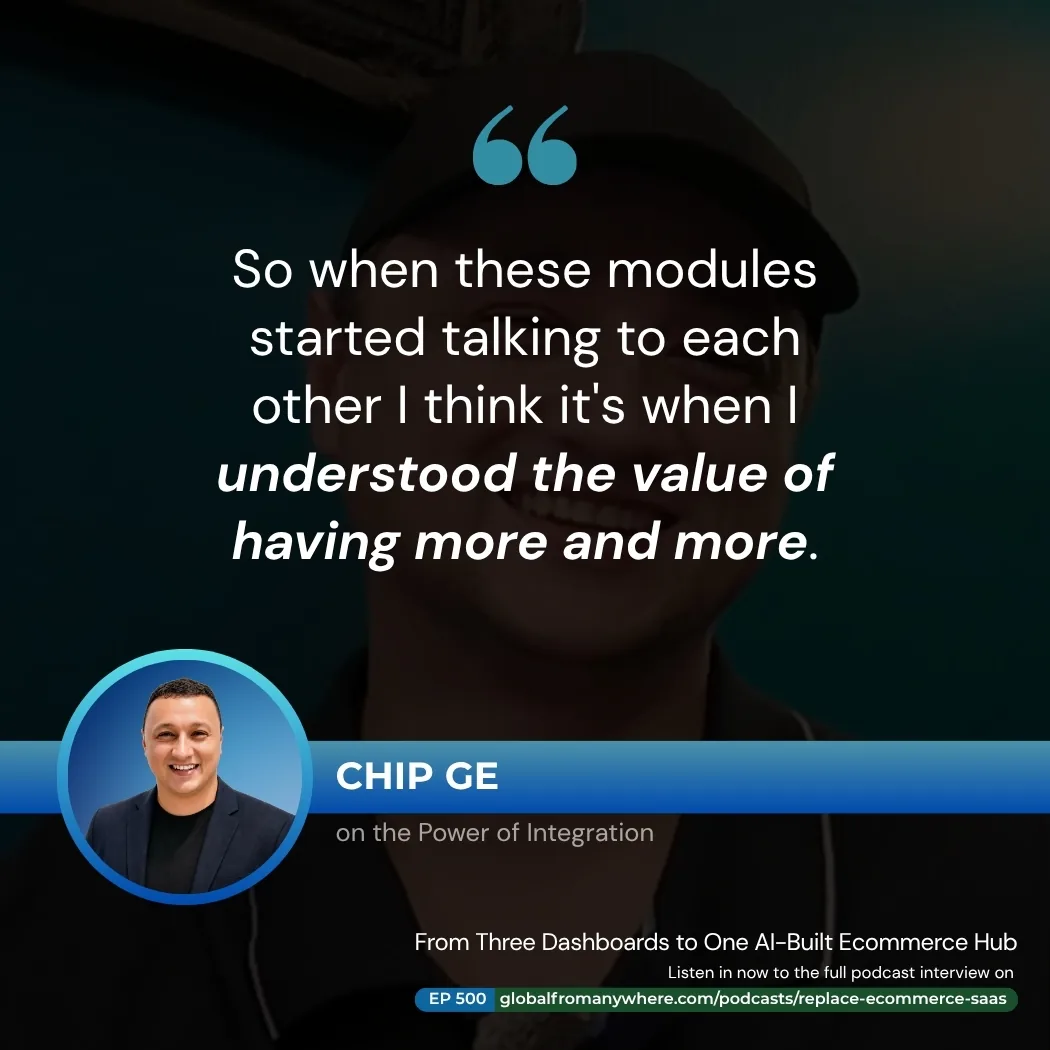
In GFA500, Mike Michelini speaks with Cross Border Summit speaker Chip Ge about building BC Hub, an AI-assisted operating system that connects profitability, inventory, advertising, creators, accounting, and the business rules behind them.
What you will learn
- Why Chip outgrew Sellerboard, SoStocked, spreadsheets, and other disconnected tools
- How a non-traditional developer can use Claude and OpenAI Codex as planning, coding, and review partners
- Why written business rules matter more than prompts when AI agents build operational software
- How shared data changes decisions across margin, inventory, advertising, and purchasing
- What failed, including database, configuration, and AI-usage-cost mistakes
- A practical framework for deciding what to build and what to keep buying
From separate tools to one decision system
Chip describes the frustration of opening multiple systems just to decide whether a product is profitable and whether it should be reordered. His answer was not to rebuild every SaaS product. It was to create a shared operating layer that lets his team and AI assistants work from the same data and the same rulebook.
Building with AI coding agents
The conversation covers Chip's workflow for planning features, reviewing risky changes, and resolving disagreements between models. A recurring lesson is that the durable asset is the specification: the written rules for fees, data precedence, protected behavior, and review.
Where SaaS still wins
Chip is clear that building is not automatically better. Vendors still win when they own useful data you cannot reproduce, or when they provide reliable commodity infrastructure. The practical path is to run a new system beside the old one, reconcile the numbers, and accept that maintenance is ongoing.
Topics and tools mentioned
- Amazon, Shopify, and TikTok commerce data
- QuickBooks
- Sellerboard and SoStocked
- Keepa, Data Dive, and Scale Insights
- Next.js, Supabase, and Vercel
- Claude and OpenAI Codex
Chip will expand on this operating approach at Cross Border Summit. Learn more at crossbordersummit.com.
Comments